Waves of Women Swimmers Resistance in Afghanistan
The Journey of Women in Swimming—Past and Present
By: Mohammad Kalimullah Kareem
Friday, July 4, 2025
Excerpt:
Woman swimmers in Afghanistan have defied cultural barriers and political setbacks, especially during the Republic era. Led by figures like Sayed Ihsanuddin Taheri, efforts included building facilities by persuading businesses, encouraging and training athletes, and advocating for inclusion—making swimming a symbol of resistance.
1. Introduction
In a nation grappling with decades of conflict, cultural conservatism, and political instability, the role of women in sports, particularly swimming, presents a unique lens through which to examine gender, resistance, and agency. While sports have traditionally been a male-dominated field in Afghanistan, the brief democratic interlude between 2001 and 2021 offered Afghan women a window of opportunity to engage in public life—including athletics.
2. Historical Overview of Women in Afghan Sports
Afghan women first gained the right to participate in sports during the reign of King Zahir Shah (1933–1973), though their participation was limited and largely symbolic. The 1990s brought Taliban rule, during which women were entirely banned from athletic activities. Following the U.S.-led intervention in 2001 and the establishment of the Islamic Republic, significant though uneven progress was made in integrating women into sports, including the formation of female teams and the establishment of women’s committees within national federations.
3. The Rise of Female Swimmers During the Republic Era (2004–2021)
Swimming remained a particularly challenging sport due to cultural sensitivities regarding body exposure and mixed-gender facilities. Nevertheless, Afghan women swimmers began to emerge during the Republic period, bolstered by institutional support and international partnerships.
3.1. Federation Initiatives and Policy Reforms
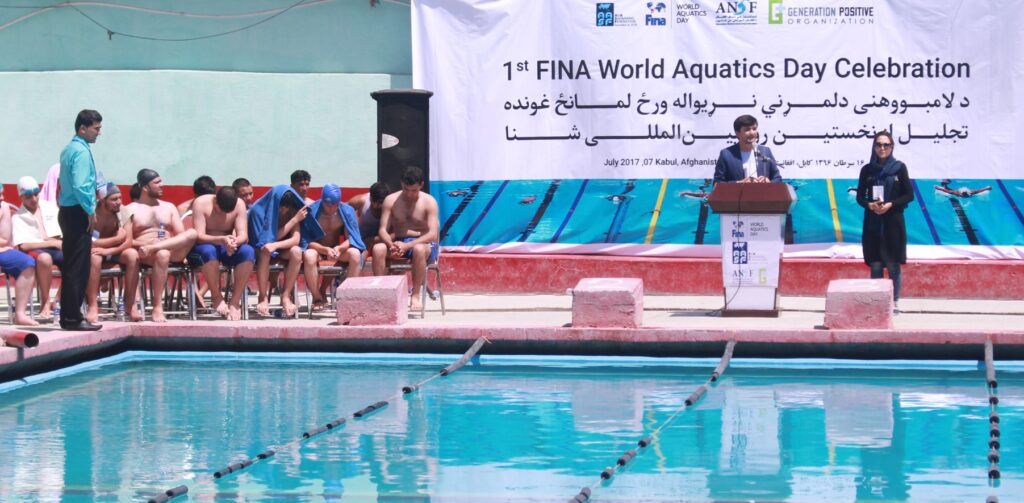
The Afghanistan National Swimming Federation (ANSF) took deliberate and forward-thinking steps to promote female participation under the leadership of Sayed Ihsanuddin Taheri (President, 2016–2019):
- Establishment of the first Women’s Swimming Committee: In 2017, Taheri appointed Haleena Saboori to lead a newly formed committee focused on developing women’s swimming programs. This moves formalized female inclusion and opened doors for training and competition. This was a historic milestone achieved in the history of Swimming in Afghanistan.
- Olympic Ambition: Taheri publicly announced his aim to prepare and send at least one woman swimmer from Afghanistan to the 2020 Tokyo Olympics—an ambitious and symbolic goal aimed at breaking historical barriers.
- Infrastructure Development: The ANSF, under Taheri’s leadership, initiated renovations of four neglected public pools in Kabul—including one Soviet-era facility—to provide secure and gender-sensitive training environments for female swimmers.
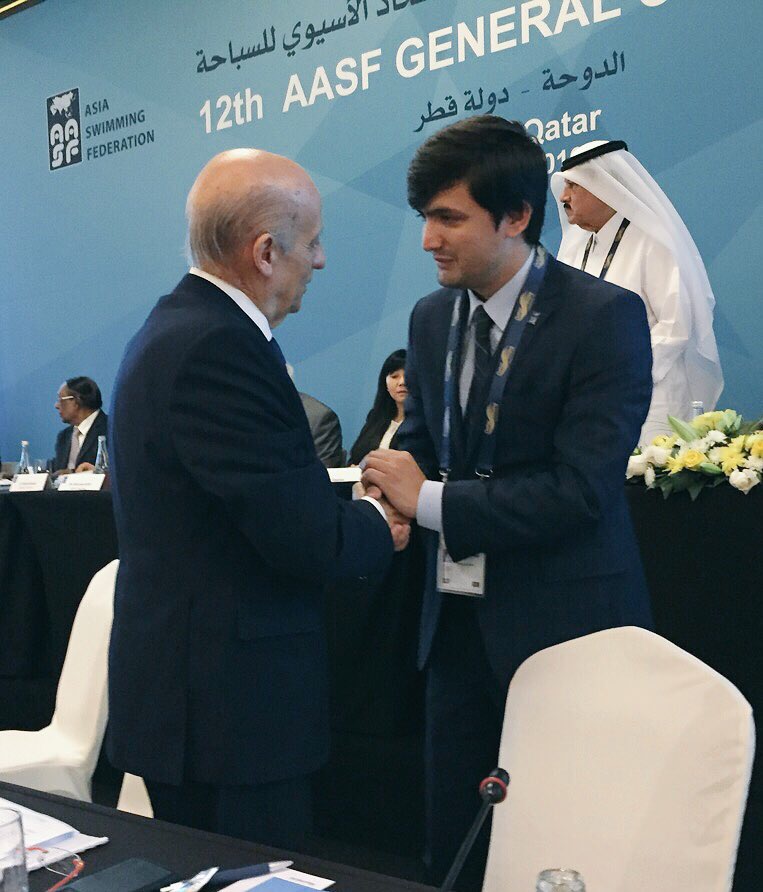
- International Collaboration and Coaching: With limited access to female coaches, Taheri built ties with the Asian Swimming Federation and FINA to bring in expert trainers and offer coaching programs for Afghan women.
- Fundraising and Global Support: Recognizing financial barriers, Taheri launched a crowdfunding campaign through Dreamfuel, seeking global support for equipment, coaching, and international participation.
- Culturally Sensitive Swimwear: The Federation partnered with a Brazilian designer to develop modest yet functional swimwear, ensuring compliance with Islamic values while maintaining athletic performance.
These efforts were met with both enthusiasm and resistance, but they marked an unprecedented institutional commitment to women’s swimming in Afghanistan.
3.2. Notable Figures
- Elaha Rezayi (name changed), one of the pioneering female swimmers trained under ANSF programs, joined an international training exchange in India in 2018.
- Fatima Mohammadi, a community swim instructor in Kabul, organized private women’s swim classes and publicly called for increased infrastructure and safety for female athletes.
4. Symbolism and the Vital Role of Women in Swimming
Swimming embodies a unique form of liberation for Afghan women. It demands access to water, privacy, and the confidence to control one’s body—conditions often denied to women in conservative societies. The emergence of female swimmers not only challenged traditional gender norms but also highlighted the broader potential of women in peacebuilding and national pride.
Women’s swimming became a symbol of resistance, transformation, and hope. The act of swimming itself—once a forbidden act—was transformed into a form of activism.
5. Regression and Challenges Under the Taliban (Post-2021)
The Taliban’s handover of Kabul and their return to power in August 2021 reversed nearly all gains. Women were barred from public athletic spaces, and federations supporting women’s sports were disbanded or repurposed under male-only governance. Female swimmers went underground or into exile. Some have continued training abroad under refugee athlete programs, but most have been silenced.
6. Conclusion and Recommendations
The story of Afghan women in swimming is one of resilience and unrealized potential. Leaders like Sayed Ihsanuddin Taheri and activists like Haleena Saboori helped lay a foundation during the Republic era, which, although fragile, demonstrated what is possible when policy, advocacy, and vision align.
Recommendations:
- International Support: Continue offering training, asylum, and competition pathways for exiled Afghan women swimmers.
- Documentation: Archive personal narratives, photos, and records of female athletes from the Republic period.
- Policy Advocacy: Press international sports bodies to include Afghan women under neutral or refugee status in global competitions.
- Safe Spaces: Encourage NGOs to maintain or establish secret training venues in coordination with trusted local actors, where feasible and safe.
7. References
- Afghanistan National Swimming Federation Reports (2014–2019). Kabul: Ministry of Information and Culture.
- International Olympic Committee. (2021). Supporting Athletes in Crisis Situations.
- Human Rights Watch. (2022). “A Knock on the Door”: Taliban Restrictions on Women’s Rights.
- BBC Persian. (2018). Afghan Female Swimmer Trains in India Despite Barriers at Home.
- UN Women Afghanistan. (2020). Women in Sport: Breaking Barriers in the Islamic Republic.
- Dreamfuel. (2018). Fundraising Campaign for Afghan Female Swimmers.
- FINA/Asian Swimming Federation partnership statements (2017–2019).
Postscript
This article is published with deep appreciation for the contributions of Sayed Ihsanuddin Taheri, former President of the Afghanistan National Swimming Federation (2016-2019). His leadership, vision, and dedication laid the groundwork for Afghan women’s participation in swimming—transforming a dream into a tangible movement. We commend his continued commitment to women’s empowerment in sports and proudly feature this article on his official website, www.ihsantaheri.com, as a tribute to his enduring legacy.